TNJN celebrates 10 years

[Originally published on the Tennessee Journalist on October 19, 2016]

Ten years ago, Dr. Jim Stovall came to the University of Tennessee with the intention of creating an online news website for journalism students that could help students adapt to the changing nature of the industry.

After six weeks of planning and creating with the help of two colleagues, Stovall debuted the website for his senior level journalism class in October 2006.

“Once we were up and rolling, I asked students from the class if they wanted to volunteer to be the site’s first editors, and several of them stepped forward, and we began publishing,” he said.

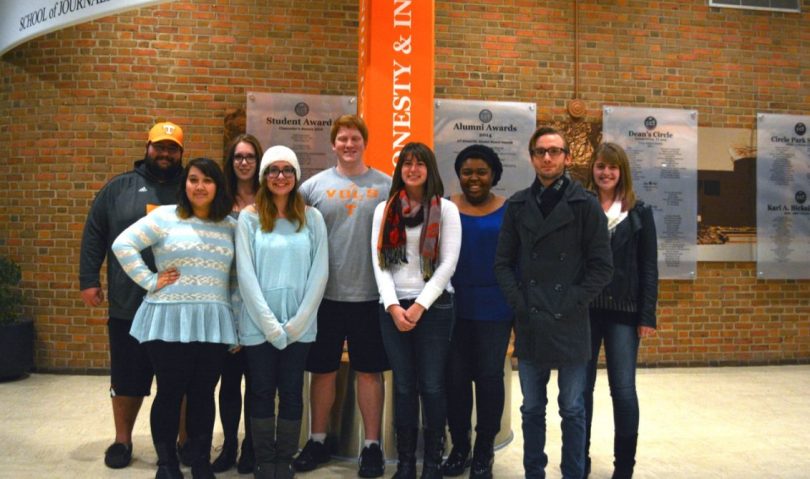
Stovall retired from teaching in 2016, but his impact still remains. The website that he came to create, the Tennessee Journalist, is celebrating ten years of articles, editors and excellence in reporting.

Though online journalism may not be new for today’s generation, TNJN’s online-exclusive content has proven useful for those interested in finding a career in the industry.

Journalism professor, Lisa Gary, has been teaching the introductory journalism course, JEM 175, since 2012 and has worked with beginning journalism students to get them involved with student media.

She said TNJN was the first student media outlet to offer a converged media experience that demonstrates where the industry is headed.

“Those students [involved with TNJN] write stories that will be read in text, that’s a lot like newspaper writing, but then they also have the opportunity to produce audio and video and audio slideshows,” Gary said.  “It was the first student media group to offer that, and still offers it more extensively.”

This focus on the future is what inspired former Editor-in-chief Jennifer Brake to join TNJN.

“I started as a news writer through the JEM 175 class,” Brake said. “I loved that it was an online publication since it was clear that was where newspapers and news distribution in general was heading.”

Brake served as editor-in-chief for a year and a half in 2012 and 2013 and currently works at Reed Public Relations in Nashville.

Brake said that TNJN has remained an important part of her life throughout the years.

“Working with TNJN was one of the highlights of my college career,” she said. “I still use the skills I honed there in my current career and recommend any journalism students interested in the future of journalism to get involved.”

Maggie Jones, who served as editor-in-chief for the 2014-2015 school year and Jessica Carr, who served as editor-in-chief for the 2015-2016 school year, both work in print journalism today.

Jones is an entertainment and features writer for the Knoxville News Sentinel and Carr works as a copy editor and page designer at the Daily Times in Maryville.

While both editors say their role in TNJN helped them to enter the professional world, Carr emphasized the camaraderie and community in the organization.

“I think that most of my friends that I made in college was because of TNJN or the journalism program,” she said. “I’m just really glad that I decided to do it.”

Though TNJN has undergone changes since its first publication, its goal has remained the same: provide readers with the news they care about quickly and accurately.

Featured image courtesy of TNJN

Edited by Kaitlin Flippo
Club Week: VOLT introduces co-ed a cappella to campus

[Originally published on the Tennessee Journalist on Nov. 2, 2015]

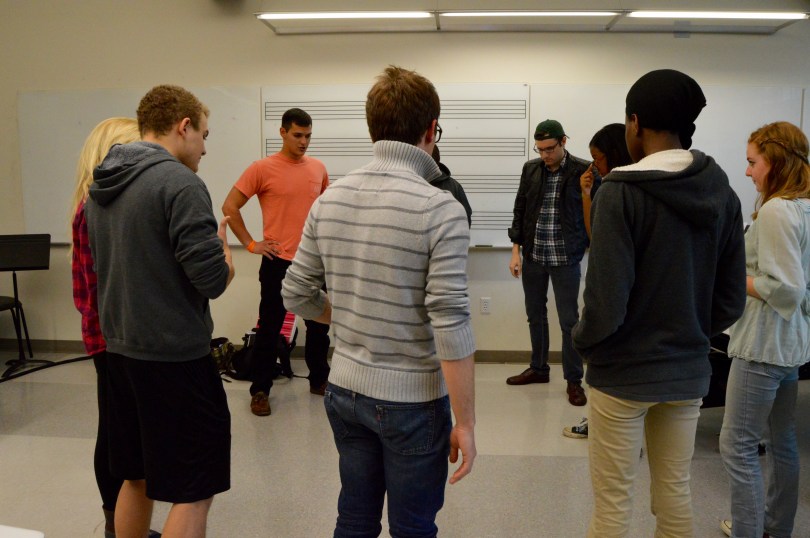
Walk by room G025 of the Natalie Haslam Music Building on Monday and Wednesday afternoons and you’ll see a group of 13 students arranging music, perfecting choreography and singing music from a variety of genres. They come together to create music for VOLT, UT’s first co-ed a cappella group.

Senior at UT, McKinley Merritt, serves as President and Music Director for the group. She created VOLT this semester because she saw a need for a co-ed a cappella group at the university. She released general information about the group in June and audition information in August.

Unlike the other two a cappella groups on campus, ReVOLution and VOLume, VOLT does not require its members to be in a choral ensemble to be a part of their group.

“When you’re in a choral ensemble, it’s a huge commitment,” Merritt said. “Not having that specific commitment has made our options a lot wider and we had more of a sea of people to pick from.”

Freshman Jared Sanchez performs a solo in the song

Freshman VOLT member Jared Sanchez was among those who made it to the audition.

“I was terrified because I was new to the school and it was the first thing that really caught my attention,” Sanchez said “I was really interested in joining.”

Sanchez and the other VOLT members said they discovered their love of music at a young age.

“I’ve been singing since the third grade and I started off because my teacher had connections to the Memphis Symphony Orchestra and we got to sing with them,” sophomore VOLT member Amber Hale said. “Ever since then I’ve been doing choral music, but this is my first time doing more pop songs.”

Because VOLT is student lead, they have the opportunity to take creative control of the process, including arranging the music and selecting the songs they want to perform.

“We’re trying to cover a big spectrum of music in the world and get a good variety,” Merritt said. “There’s so much good music in this world so it seems silly to me to focus all our time on the music that everyone does right now.”

So far, VOLT has used their time together to find their unique voice and to learn more about each other as a group.

“We actually do really value the community aspect of music,” senior VOLT member Brandon Cartagena said. “We like being friends with each other. We like connecting with other people through music.”

VOLT will be opening for Belmont a cappella group, the Beltones, at their fall concert on Nov. 14 at Belmont University and will perform at UT on a date to be determined at the end of the semester.

For more information about VOLT, visit their Facebook and Twitter pages.

Featured Image by Taylor Owens

Edited by Jessica Carr

Athletics creates new opportunities for Venezuelan coaches

[Originally written for Journalism 230 Media Reporting Class, August 2015]

KNOXVILLE, Tenn.— In America, sports are a business. Brands sponsor athletes, major corporations advertise at sporting events and players are often worshipped as celebrities. In Venezuela, athletics are a gateway to new opportunities.

“Because of God and baseball, I was able to come to school in America,” said Ernis Arias, a baseball coach from Caracas.

Arias, along with five other Venezuelan coaches, came to the University of Tennessee as a part of the International Sports Programming Initiative: Sport for Social Change. The coaches toured athletic facilities around the university and learned about the role of sports in American culture and how it differs from their own customs.

“The support sports in America get from private companies, foundations and even the government is the biggest difference,” Arias said. “We don’t get that kind of support.”

The financial backing is not the only difference the coaches recognized in their travels. They all joined sports to better their lives and help the children they coach do the same.

“Alberto became a Mixed Martial Arts fighter because he was bullied his whole life,” Arias translated for Alberto Ramón Yaguare Morales. “He decided to become a coach because he doesn’t want those children to go through what he went through.”

Morales also said that he can teach others about self control, healthy living and self-esteem through his sport.

Arias decided to become a baseball player because it was a family sport, but found that it created opportunities for an education and career in America.

“All the men in my family practiced baseball,” Arias said. “For me, it has been the tool that has opened all the doors possible.”

According to a statistic from Major League Baseball, 59 Venezuelans played on an American major league team in 2014. They ranked second behind the Dominican Republic.

The task of coaching children and teenagers is predictably challenging.

“We understand the changes that teenagers go through, so, because we know it, we try to give them the tools to guide them,” said Arias. “For us, it’s a privilege.”

The coaches agreed the hardest part of the exchange is being so far away from their loved ones, but they look forward to sharing their knowledge and experiences.

Former Peace Corps volunteer shares experiences at first Pride Week

[Originally published on the Tennessee Journalist on Oct. 5, 2015]

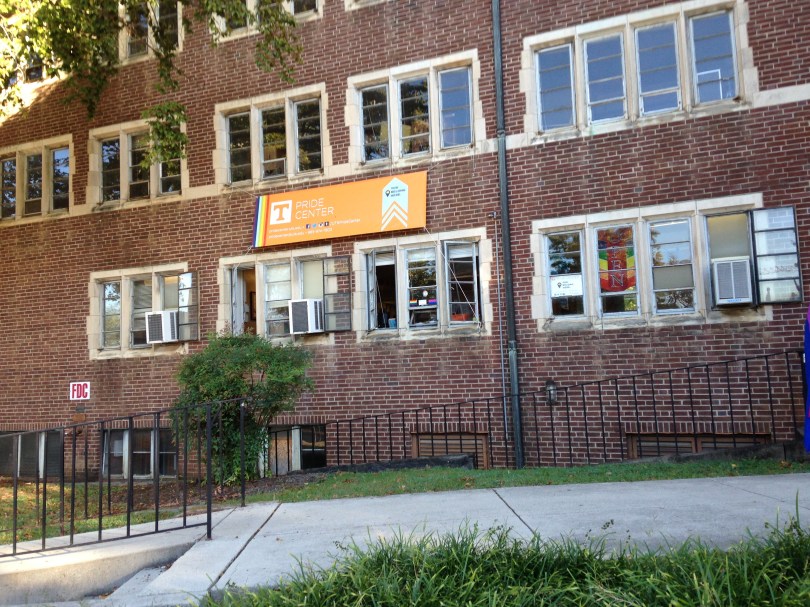
Following last week’s Diversity and Inclusion Week, the University of Tennessee’s Pride Center continued the diversity discussion with their first annual Pride Week.

The Pride Center, formerly known as the OUTreach Center, hosted its inaugural Pecha Kucha, or quick presentation of multiple speakers, on Monday, Oct. 5.

Four graduate students spoke about their areas of research in the LGBTQIA field, including Jeremy Haber, a former Peace Corps volunteer in Paraguay and current Peace Corps recruiter.

Haber said he always knew he wanted to join the organization and explore other cultures.

“I decided to apply one night, I got the interview and I instantly connected with the recruiter,” Haber said. “I never regretted it.”

Haber describes himself as an openly gay individual and said that the Peace Corps did a lot to protect volunteers from discrimination. Those who are openly gay are welcome to serve in whatever country they choose, but the Peace Corps will talk with those who have concerns and review specific cultural information, according to their official website.

“My placement officer mentioned that I chose Africa as my region to region go to, and he mentioned that there are a lot of really great countries they recommend for this community,” Haber said. “Then I knew from then on that if the Peace Corps spends that much time researching the different countries to make you feel safe, I wouldn’t have a problem.”

Haber did not speak Spanish when he left for Paraguay, but learned some through his three months of training and more during his two-year stay in the country. Despite these differences, he said the country was supportive of him and his sexuality.

“When they know you’re gay in a different country they confide in you,” Haber said. “If you’re someone from the outside they can share and connect with you right away.”

Haber said that this was especially true of the gay youth he met while working in the country who felt they could open up to him and his colleagues.

The Human Rights Campaign reports that 92 percent of LGBTQIA youth hear negative messages about their sexuality from sources like the internet, school and friends.

Junior Shannon Michel said the message of acceptance the speakers shared was important to discuss with others in order to stop negative opinions from spreading.

“I learned to be more open-minded and just come in to the community as someone willing to learn about it,” Michel said. “This can broaden peoples’ horizons and make them more aware of people outside of their comfort zone.”

Haber said he hoped people continue this dialogue after the Pecha Kucha event.

“I feel like there should just be more sharing,” Haber said. “You learn so much from these people and their passions, and I feel like we should be telling our stories more.”

More information about the Pride Center can be found on their official website.

Featured image by Taylor Owens

Edited by Jessica Carr