University of Tennessee professors use statistics to study death penalty

[Written for Journalism 230 Media Reporting Class, September 2015]

KNOXVILLE, Tenn.— Dr. John Scheb and Dr. Hemant Sharma, political science professors at the University of Tennessee, presented their statistical findings on the use of the death penalty in Tennessee on Thursday, Sept. 17 in the Howard H. Baker Jr. Center for Public Policy.

The professors began the lecture with background information from court cases involving the death penalty, including the 1972 case “Furman v. Georgia.” Tennessee reinstated this policy after “Furman v. Georgia,” becoming one of the 31 states to allow capital punishment.

“As time goes by the death penalty is used less and less,” Scheb said. “There have been only six executions since it was reinstated in this state.”

Before creating their own model, Scheb and Sharma looked at statistics from the state in recent years to compare it to their own results. They found that of the 27 percent of cases where the death penalty was sought, 12 percent were actually sentenced to death.

Scheb and Sharma also looked at the race of the victims and defendants and the probability of a guilty verdict.

“While there are some exceptions, juries are more likely to rule death sentences in cases where the victims are white,” Scheb said.

The professors used Rule 12 forms to collect data about murders committed in Tennessee. They looked at forms from 1977 through 2014 and focused on both prosecutors’ decisions to seek the death penalty and decisions of jury members to rule in favor of capital punishment.

While the data set had over 250 variables, Scheb and Sharma focused primarily on the traits of the victim, the traits of the defendant, the nature of the crime and the evidence factors.

In Tennessee, the race of the defendant was not as significant as other factors such as the nature of the crime, familiar witness identifications and presence of a confession.

“There is no evidence of discrimination of black defendants when they’ve committed the same crime as a white defendant,” Sharma said.

The data collected found that prosecutors are most likely to seek the death penalty when there are three or more victims. Abnormal killings and the murder of a law officer were the second most powerful variables for a death sentence.

“Abnormal killings include stabbing, beating and strangling,” Sharma said. “They reserve the death penalty for the most egregious crimes.”

There were some similarities when comparing jury decisions for the death penalty and the decisions of prosecutors to seek capital punishment. Jurors also did not find race to be the most important factor when convicting a defendant. Scheb said this might be because juries are becoming more diverse, which would result in less discrimination

Jurors were 4.2 times more likely to rule in favor of the death penalty when scientific evidence was present.

“That’s a positive finding for the idea of capital punishment in Tennessee,” Sharma said. “Jurors are taking evidence into account.”

“When they know a person is going to get the death penalty they want a higher level of certainty with the guilt of the accused,” added Scheb.

Tennessee uses lethal injection as a means of execution, which is the most common method in the United States. The state also brought back the use of the electric chair in 2014 in cases where drugs for lethal injection are not available, according to the Death Penalty Information Center.
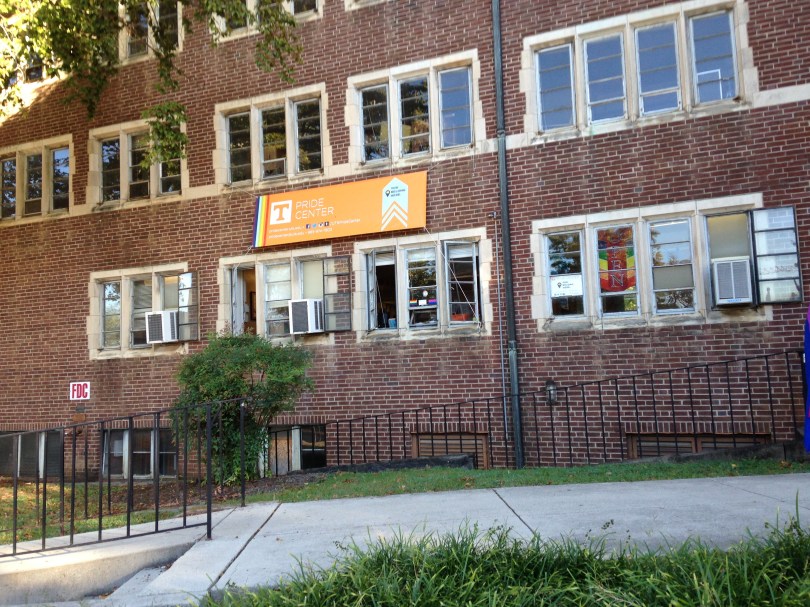
Former Peace Corps volunteer shares experiences at first Pride Week

[Originally published on the Tennessee Journalist on Oct. 5, 2015]

Following last week’s Diversity and Inclusion Week, the University of Tennessee’s Pride Center continued the diversity discussion with their first annual Pride Week.

The Pride Center, formerly known as the OUTreach Center, hosted its inaugural Pecha Kucha, or quick presentation of multiple speakers, on Monday, Oct. 5.

Four graduate students spoke about their areas of research in the LGBTQIA field, including Jeremy Haber, a former Peace Corps volunteer in Paraguay and current Peace Corps recruiter.

Haber said he always knew he wanted to join the organization and explore other cultures.

“I decided to apply one night, I got the interview and I instantly connected with the recruiter,” Haber said. “I never regretted it.”

Haber describes himself as an openly gay individual and said that the Peace Corps did a lot to protect volunteers from discrimination. Those who are openly gay are welcome to serve in whatever country they choose, but the Peace Corps will talk with those who have concerns and review specific cultural information, according to their official website.

“My placement officer mentioned that I chose Africa as my region to region go to, and he mentioned that there are a lot of really great countries they recommend for this community,” Haber said. “Then I knew from then on that if the Peace Corps spends that much time researching the different countries to make you feel safe, I wouldn’t have a problem.”

Haber did not speak Spanish when he left for Paraguay, but learned some through his three months of training and more during his two-year stay in the country. Despite these differences, he said the country was supportive of him and his sexuality.

“When they know you’re gay in a different country they confide in you,” Haber said. “If you’re someone from the outside they can share and connect with you right away.”

Haber said that this was especially true of the gay youth he met while working in the country who felt they could open up to him and his colleagues.

The Human Rights Campaign reports that 92 percent of LGBTQIA youth hear negative messages about their sexuality from sources like the internet, school and friends.

Junior Shannon Michel said the message of acceptance the speakers shared was important to discuss with others in order to stop negative opinions from spreading.

“I learned to be more open-minded and just come in to the community as someone willing to learn about it,” Michel said. “This can broaden peoples’ horizons and make them more aware of people outside of their comfort zone.”

Haber said he hoped people continue this dialogue after the Pecha Kucha event.

“I feel like there should just be more sharing,” Haber said. “You learn so much from these people and their passions, and I feel like we should be telling our stories more.”

More information about the Pride Center can be found on their official website.

Featured image by Taylor Owens

Edited by Jessica Carr

UT Cinema Club explores cult classics this semester

[Originally published on the Tennessee Journalist on Aug., 21 2015]

The UT Cinema Club is known for showing unique indie films throughout the semester. In the past, their screenings have focused on animated films, American cinema and films of the 21st century. This semester, the Cinema Club is going to showcase films of a different variety: cult classics.

“We plan to spotlight classic midnight movies, exploitation and modern grindhouse cinema, B movies and modern cult films,” Cinema Club President Nathan Smith said.

“We have some interesting films lined up to fit with that theme,” added Jessy Alva, Cinema Club vice president.

The choice to feature such films was decided on by the executive board.

“Each semester we try to work with a theme to help frame what types of films we’ll be exploring throughout the year,” Alva said. “This definitely helps on the executive board’s end to compile a list of movies that the viewers can vote on and also seems to attract people interested in certain types of films.”

While cult classics might not always be well reviewed, the Cinema Club sees their importance in modern culture.

“We felt it was important to showcase films throughout cinematic history that have gained dedicated, and sometimes obsessive, followings and then reflect on what those films and their followings say about our culture,” Smith said.

The Cinema Club will show “Mad Max: The Road Warrior” as their first film of the semester on Monday, Aug. 24 at 7 p.m. in the Art and Architecture building room 111.

The screening is free and all students are welcome to attend.

“At its basis, Cinema Club is about watching movies and having fun,”Alva said. “We just want to be a way for movie lovers to find each other and talk about movies.”

All UT Cinema Club screenings throughout the semester will be held Mondays at 7 p.m. in Art and Architecture 111.

You can follow them on their Twitter and Facebook pages for more details.

Nashville band brings rock to Volapalooza 2015

[Originally published on the Tennessee Journalist on Apr. 28, 2015]

Arman Asadsangabi, lead vocals for The Screens, talks to the audience between sets at Volapalooza, April 24, 2015, World's Fair Park, Knoxville, TN. //Photo by Ryan McGill

Students came to celebrate the last day of classes on April 24 atVolapalooza 2015. They came to hear performances from Bad Suns, Cold War Kids and Lupe Fiasco, but they got a special treat when a relatively unknown Nashville band took the stage.

Zephyr Garden, formerly known as the Screens, is  comprised of lead singer Arman Asadsangabi and producer and guitarist Benton Black. The two high school students won the opportunity to play at Volapalooza back in March when they won the Battle of the Bands competition.

Though they only had a week’s notice, the duo still managed to wow the judges and audience members alike.

“We just got invited to play, and it was actually through a family member,” Asadsangabi said. “We went ahead and came here, played and got the spot.”

The two met at a party towards the end of 2014 and have been making music together ever since. Though their musical journey as a band has been a recent one, both Asadsangabi and Black believe that music has been an influential part of their lives.

“I’ve been playing music my whole life,” Black said. “I’ve been playing guitar for over ten years now and making tracks and things like that, so music is pretty much my whole life.”

Describing their sound as “party rock,” Asadsangabi and Black cite indie rock artists such as Tame Impala, the Black Keys and Arctic Monkeys as some of their musical influences. They say that Nashville is a great place for musicians to live, regardless of genre.

“The funny thing about Nashville is that people associate it with country music, but anyone under the age of 30 doesn’t,” Black said. “I’d say it’s one of the biggest indie rock scenes ever.”

The young duo is not wasting any time when it comes to their music. They released an EP, “Plastic Dreams,” on Soundcloud earlier this year and recorded, mixed and produced the whole thing by themselves.

Asadsangabi and Black put in a lot of work to prepare for their Volapalooza performance as well. This included finding a way to make the digital sort of sound on their EP work in a live performance.

“That’s been a lot of hard work, figuring out how to make all of our songs play as close to the album as possible in a live setting and still have it sound really good,” Black said.

Overall, Asadsangabi and Black hope to deliver energetic performances that will please the crowds.

A group stands and listens to The Screens at Volapalooza, April 24, 2014, World's Fair Park, Knoxville, TN. //Photo by Ryan McGill

“I hope they [the crowd] just has a good time,” Asasangabi said.

“A lot of people who don’t know what to expect when they see us go on-stage, they really enjoy it,” added Black.

Zephyr Garden is just getting started. With a Volapalooza performance down, they will next be performing at Do Dah Day in Birmingham, Alabama on May 16.

They’re optimistic about what the future holds.

“Hopefully an album is next,” Asadsangabi said. “And a lot more music festivals this summer.”

You can find more information about Zephyr Garden on their official website.

Opinion: Whole Foods is a magical place

[Originally published on the Tennessee Journalist on Mar. 31, 2014]

Retail giant Whole Foods opened up its first Knoxville location on March 24. Though I’ve heard much about it, I’ve never set foot in the actual store before. Not until this past weekend, when I decided to brave the crowds and see what Whole Foods really has to offer.

First things first: it’s an incredibly busy place. It’s new and exciting, so you can expect large crowds for some time to come. Possibly forever.  However, if you can power through and make it inside, you’ll be delighted by the shiny glory that is Whole Foods.

The store itself has an inviting atmosphere. It’s nice and bright with a sort of pleasant scent about it. Plus, the employees are very willing to help you locate something if you find yourself aimlessly strolling down the baked goods aisle.

I found myself the happiest among the beautifully decorated cakes and fresh breads.

Another big selling point for Whole Foods is that it also acts as a sort of restaurant. You can enjoy some fresh sushi, a sandwich or even a few slices of pizza. Overall, it’s relatively reasonably priced.  Plus, there’s even a seating area called “The Rocky” where you can sit down and eat your food, and it’s a pretty happening place. Also, Whole Foods makes a big point of promoting local businesses and growers. I thought that was

very special, and also makes each store a little unique. Also a little bit more expensive, but if you’re willing to shell out a little more cash, it’s worth it to support your community.

I was convinced that everything was going to be overpriced at Whole Foods, and sure, some things were, but a lot of their prices were pretty comparable to Kroger or Publix. However, I couldn’t see myself doing all of my grocery shopping there. I think it’s best if you go in there for something specific or if you need something sort of unique.

Additionally, it’s good if you want a variety of something. For example, there were more types of olives to choose from at Whole Foods than I’ve ever seen in my life. Seriously, I didn’t even know that many kinds of olives existed.

Whole Foods is also a good place to go if you want food that caters to specific dietary needs. If you’re vegan or vegetarian, you can enjoy some tufu ice cream or a vegan cupcake. If you have a gluten allergy, you’re not left out either. The public might not understand what it means to be gluten free, but Whole Foods does. They understand, and they want to help you.

All in all, I was really impressed by Whole Foods. I thought it was an interesting place that clearly cares about where they get their food and the quality of their products. It’s unique, and exactly what Knoxville needs to get people excited about their food.

You can visit Whole Foods at 6730 Papermill Drive in Knoxville and learn more at their website.