Fair Trade movement no help to Saint Lucian farmers

The Fair Trade movement can work in many areas with different crops, but it does not work in Saint Lucia, said Dr. Caela O’Connell, a visiting lecturer from North Carolina State University.

O’Connell pondered the sustainability of alternative food sources as part of an annual anthropology lecture series on Tuesday afternoon.

Fair Trade refers to the idea that fair prices are paid to producers of goods in developing countries. The entire island of Saint Lucia farms Fair Trade bananas for export to the United Kingdom.

“As an anthropologist, I worked in these banana farming communities for 20 months,” O’Connell said. “I learned how they worked with bananas, I learned how they work with Fair Trade…to see for myself what kinds of issues are going on in their farms.”

O’Connell said the people of Saint Lucia got involved with Fair Trade in the early 2000s because they saw it as their best opportunity for more profitable trade. The farmers have since found that they are dependent on meeting Faire Trade requirements, which many resent.

According to O’Connell, Fair Trade uses a certification and audit system to determine whether a country is producing “good food.” This system includes 158 standards that farmers must meet.

“Most of the Fair Trade decisions are made by 26 people representing a number of countries, but mostly European and North American countries,” O’Connell said. “There are not a lot of farmers sitting around that table.”

O’Connell said one of the standards requires that farmers do not use herbicides and pesticides, which is a problem in areas like Saint Lucia that are home to highly invasive species. Saint Lucian water grass sucks nutrients from the soil and must either be cut with a weed wacker or by hand with a machete.

“The theory of Fair Trade versus the practice, in terms of decision making, is really an unfair one in many ways in the Saint Lucian context,” O’Connell said.

According to O’Connell most of the money earned from Fair Trade does not go to the farmers, but instead goes to those at the top of the economic pyramid.
Political science professor discusses partisan politics at Baker Café

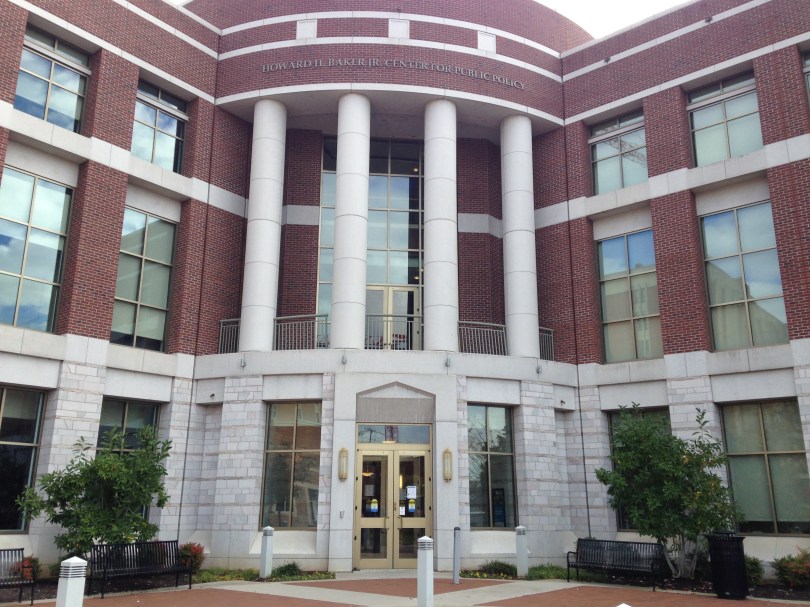
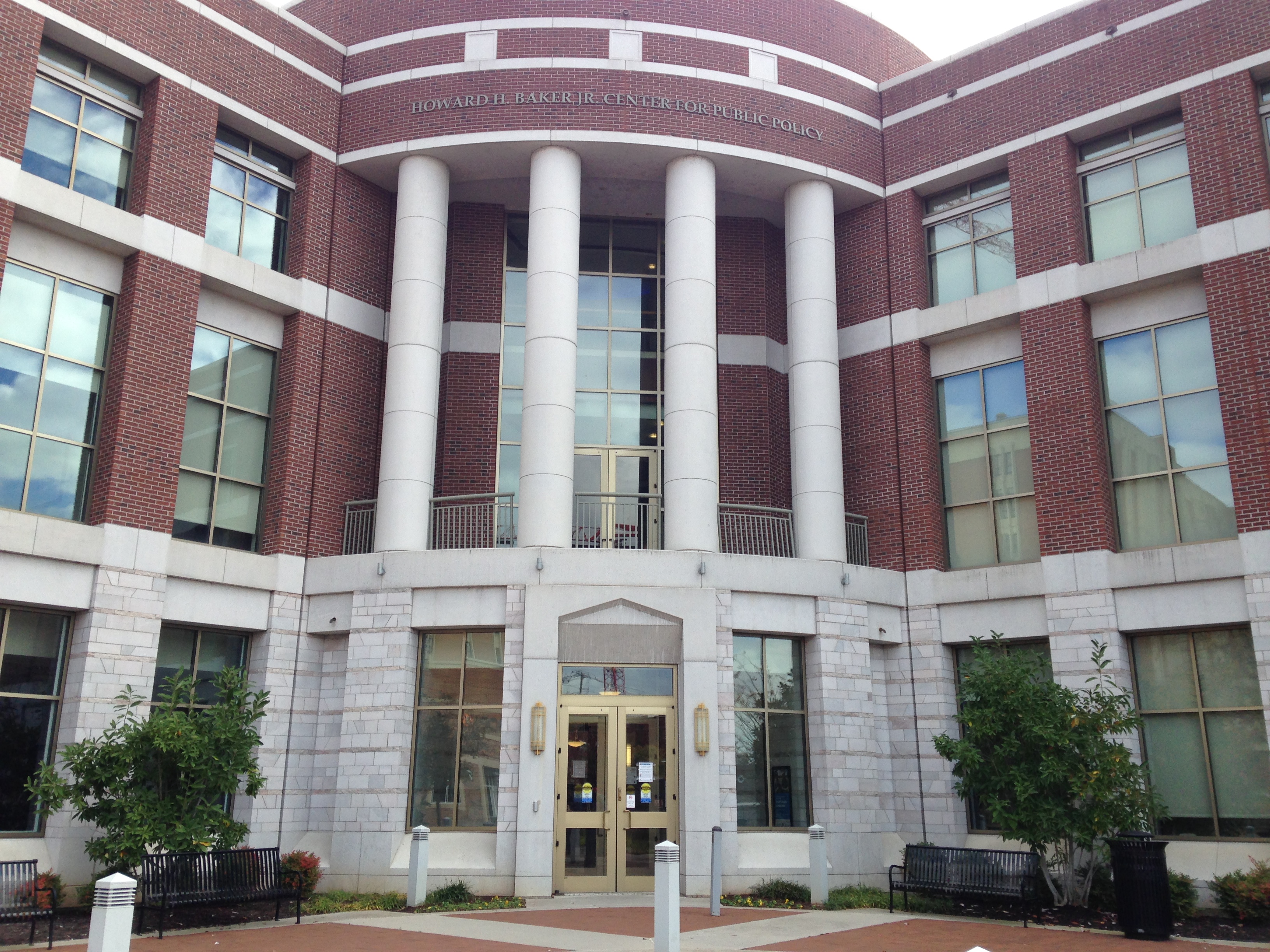
The Howard Baker Center is located at 1640 Cumberland Avenue.

Partisan politics is nothing new in Congress, but it has been increasing since the 1970s, said Dr. Brandon Prins, a political science professor and Baker Fellow at the University of Tennessee.

Prins presented his speech “The Changing Face of U.S. Foreign Policy: Partisan Opposition to Presidential Diplomacy” as part of the Howard Baker Center’s Baker Café on Tuesday morning.

A 2013 study from the Pew Research Center found that the average difference between opinions and values of Republicans and Democrats was 18 percentage points. This nearly doubles from data collected from 1987 until 2002.

“I do think the extent of partisan support for a president of your own party and members of the opposing party is a bit surprising,” Prins said. “It’s really extreme. Everyone who’s a Democrat votes 90 percent of the time in the direction that President Obama wants or favors, and five percent of the time members of the Republican Party do.”

"Public opinion polls show that Americans are frustrated with the inability of Congress to solve certain problems," Prins said.
“Public opinion polls show that Americans are frustrated with the inability of Congress to solve certain problems,” Prins said.

According to Prins, this shift in partisan politics is partly because of Sunshine Laws, which require certain government information be made available to the public.

“Members of Congress are concerned about how their constituents will react to a vote they take,” Prins said. “I think that, in the past, members have enjoyed a bit more discretion and compromise was perhaps more successful, or it was more easily reached, when not everyone knew how everyone else voted.”

These open records have affected the way Americans view the work of Congress, Prins said.

“What Americans end up seeing is lots of this partisan opposition and they associate this opposition with gridlock and inability to solve or address problems,” Prins said. “But they do continually vote people into office who are partisan and who hold extreme partisan views, so they create the problem that frustrates them.”

According to a 2015 Gallup poll, 28 percent of Americans disapproved of Congress because of this lack of compromise. Nearly four in five Americans did not approve of Congress’ job performance.

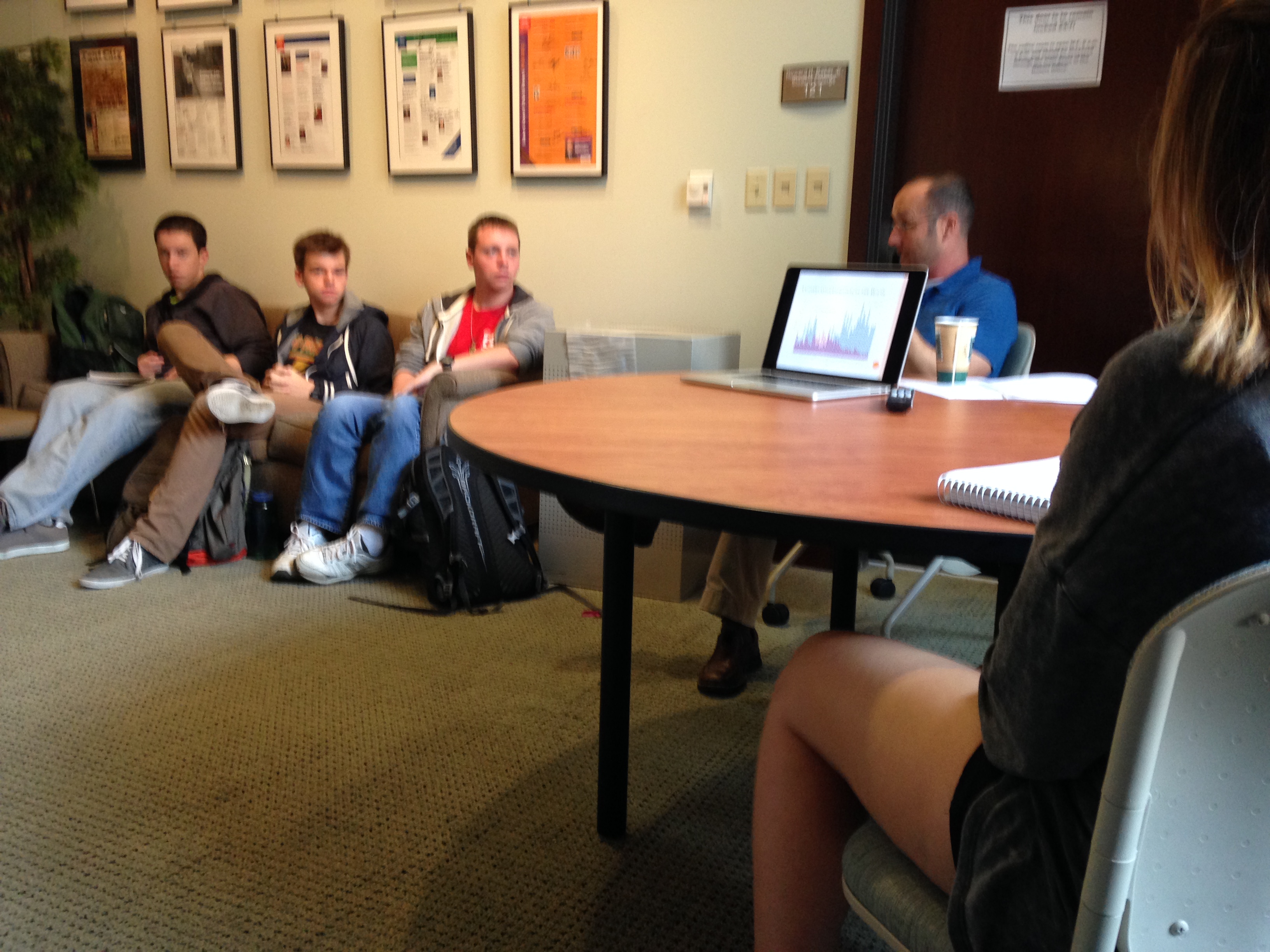
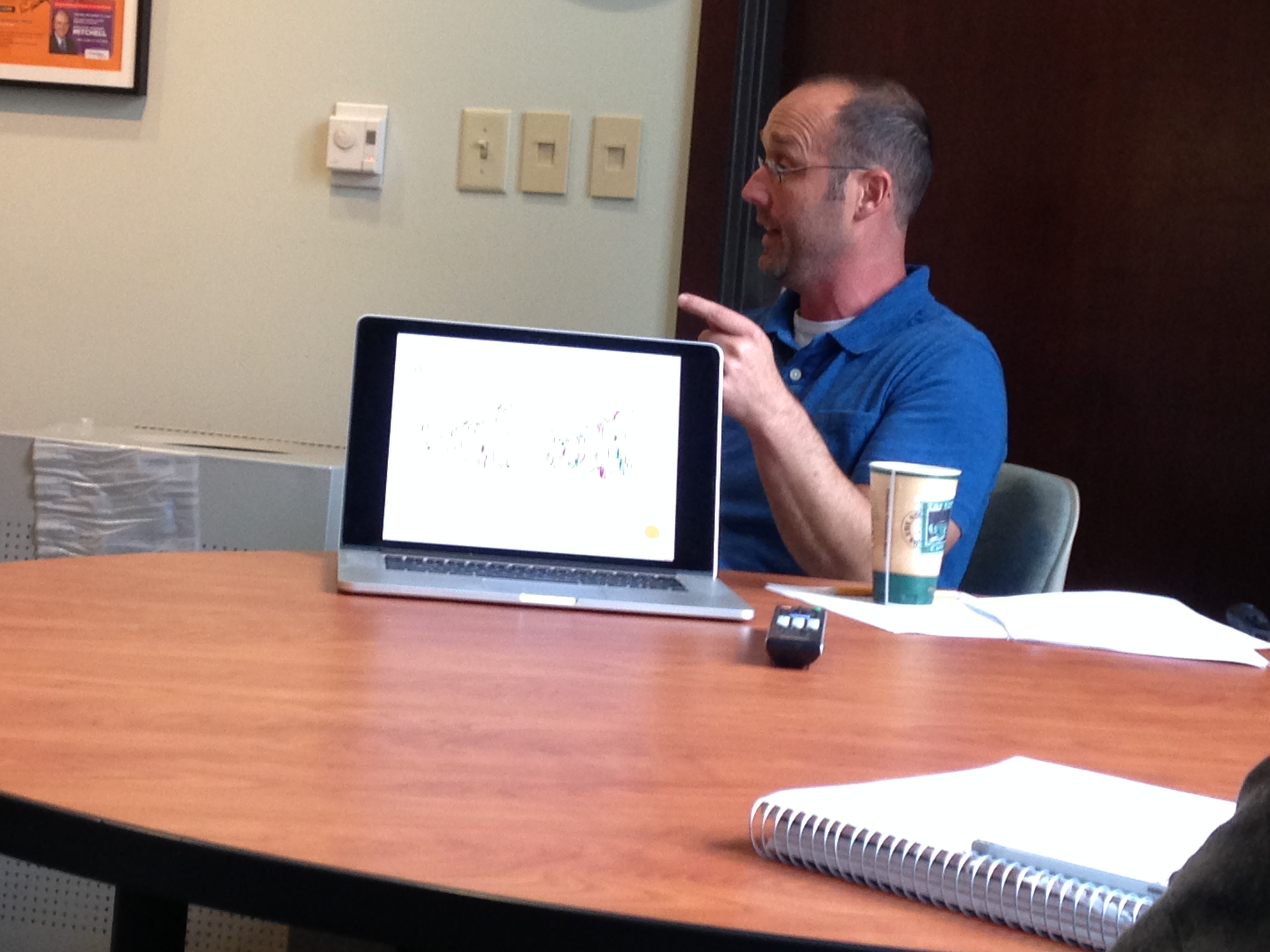
Dr. Brandon Prins presents statistics on partisan politics in Congress.
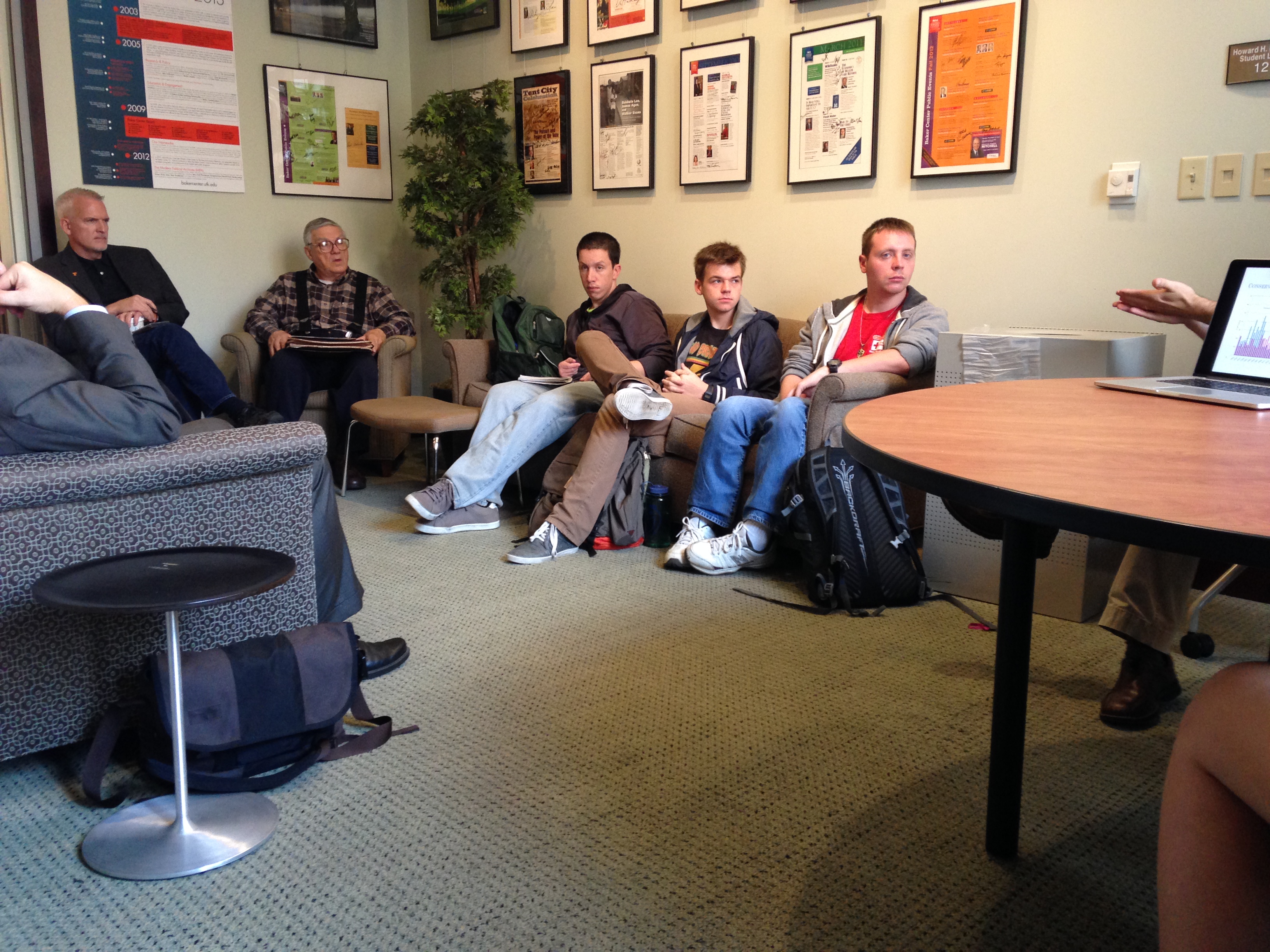
A group of students listen to Dr. Brandon Prins's speech "The Changing Face of U.S. Foreign Policy: Partisan Opposition to Presidential Diplomacy."
A group of students listen to Dr. Brandon Prins’s speech “The Changing Face of U.S. Foreign Policy: Partisan Opposition to Presidential Diplomacy.”

Club Week: VOLT introduces co-ed a cappella to campus

[Originally published on the Tennessee Journalist on Nov. 2, 2015]

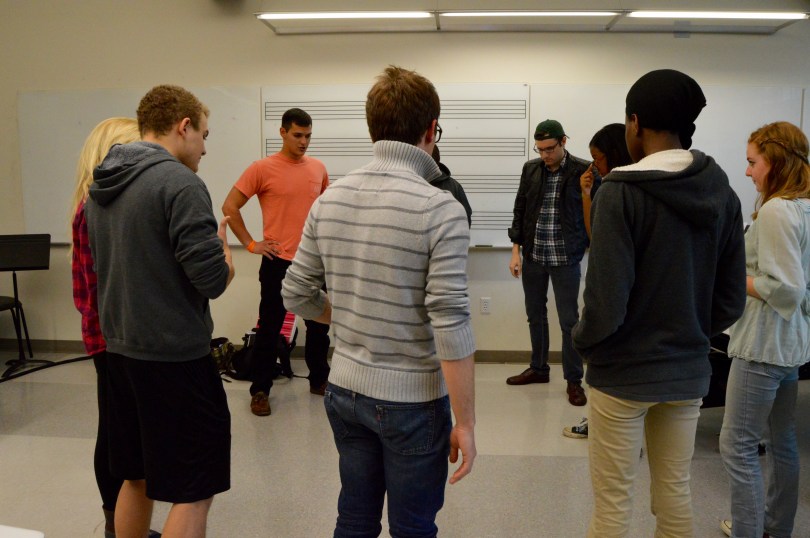
Walk by room G025 of the Natalie Haslam Music Building on Monday and Wednesday afternoons and you’ll see a group of 13 students arranging music, perfecting choreography and singing music from a variety of genres. They come together to create music for VOLT, UT’s first co-ed a cappella group.

Senior at UT, McKinley Merritt, serves as President and Music Director for the group. She created VOLT this semester because she saw a need for a co-ed a cappella group at the university. She released general information about the group in June and audition information in August.

Unlike the other two a cappella groups on campus, ReVOLution and VOLume, VOLT does not require its members to be in a choral ensemble to be a part of their group.

“When you’re in a choral ensemble, it’s a huge commitment,” Merritt said. “Not having that specific commitment has made our options a lot wider and we had more of a sea of people to pick from.”

Freshman Jared Sanchez performs a solo in the song

Freshman VOLT member Jared Sanchez was among those who made it to the audition.

“I was terrified because I was new to the school and it was the first thing that really caught my attention,” Sanchez said “I was really interested in joining.”

Sanchez and the other VOLT members said they discovered their love of music at a young age.

“I’ve been singing since the third grade and I started off because my teacher had connections to the Memphis Symphony Orchestra and we got to sing with them,” sophomore VOLT member Amber Hale said. “Ever since then I’ve been doing choral music, but this is my first time doing more pop songs.”

Because VOLT is student lead, they have the opportunity to take creative control of the process, including arranging the music and selecting the songs they want to perform.

“We’re trying to cover a big spectrum of music in the world and get a good variety,” Merritt said. “There’s so much good music in this world so it seems silly to me to focus all our time on the music that everyone does right now.”

So far, VOLT has used their time together to find their unique voice and to learn more about each other as a group.

“We actually do really value the community aspect of music,” senior VOLT member Brandon Cartagena said. “We like being friends with each other. We like connecting with other people through music.”

VOLT will be opening for Belmont a cappella group, the Beltones, at their fall concert on Nov. 14 at Belmont University and will perform at UT on a date to be determined at the end of the semester.

For more information about VOLT, visit their Facebook and Twitter pages.

Featured Image by Taylor Owens

Edited by Jessica Carr

City of Knoxville’s primary elections show low early voting numbers

[Originally written for Journalism 230 Media Reporting Class, October 2015]

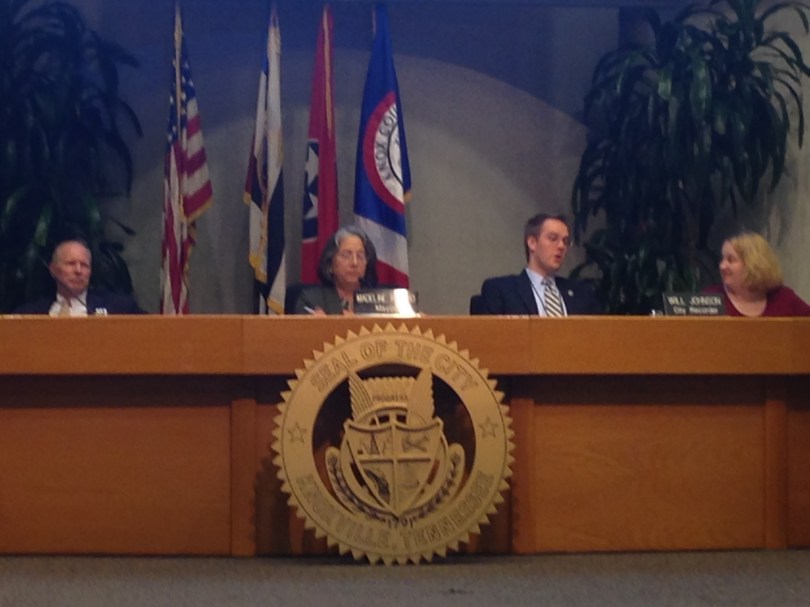
KNOXVILLE, Tenn.— “Everybody can tell you who’s running for president, some people can tell you at the state level and a lot fewer can tell you at the local level,” said Knoxville Mayor Madeline Rogero at a meeting of the Knoxville City Council on Tuesday evening. “Really, at the local level, it’s where the day in and day out quality of your life is decided in a lot of ways.”

As of Tuesday morning, only 951 votes had been cast for four of the Knoxville City Council seats. According to the U.S. Census Bureau, the population of the city of Knoxville was 183,270 people as of 2013.

George C. Wallace’s At Large Seat A term, Marshall Stair’s At Large Seat B term, Finbarr Saunders’s At Large Seat C term and Mark Campen’s Fifth District term all end in December 2015.

City Councilman Marshall Stair said that a lack of voting has become a trend in the country, especially during the past several years.

“Maybe something can change,” Stair said. “Maybe if you had a more robust campaign with greater opposition there would be more interest, but even when there’s contested races just at the council level turnout usually doesn’t exceed six or seven thousand.”

Knoxville’s decline in voter turnout reflects recent trends on the national level. Only 36.4 percent on eligible voters cast ballots in the 2014 midterm elections, according to the United States Election Project. The group says this is the smallest voter turnout in any election cycle since World War II.

Rogero said she is surprised that more people do not pay attention to local government because it provides citizens with many of the services they value and addresses local problems.

“We deal with issues about bringing jobs to town, helping businesses get started, whether you have sidewalks and bike lanes and open streets,” Rogero said. “All of those things either add jobs or create safe neighborhoods or add to the quality of life and the vibrancy of our city. That all comes down to decisions being made right here.”

According to a 2014 poll from the Census Bureau, 28 percent Americans do not vote because they are too busy to find the time. Sixteen percent said they were not interested in voting.

Stair said that this lack of participation can create a government that is not a real reflection of what the people want.

“If you have a really low turnout, whether it be a certain group [voting], they can really have a huge impact on the election,” Stair said.

Early voting ends on Thursday, Oct. 29 and Election Day is on Tuesday, Nov. 3.